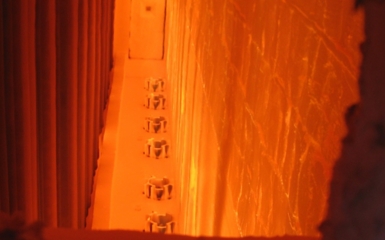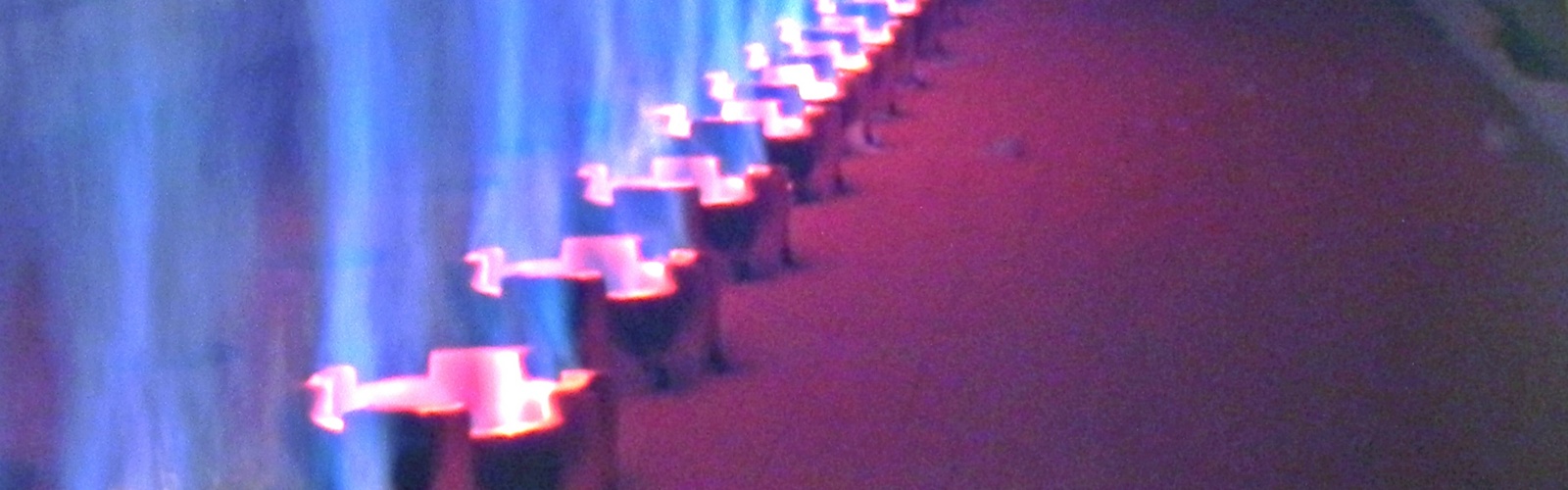
Retrofitting a fired heater with ultra-low NOx burners requires a case-by-case evaluation to determine feasibility and necessary modifications. While some ultra-low NOx burners can be installed in existing burner cut-outs with minimal changes, most retrofits require modifications to heater steel and refractory.
Our ultra-low NOx burners are designed to significantly reduce NOx emissions while maintaining stable combustion performance. Additionally, computational fluid dynamics (CFD) modeling plays a critical role in ensuring that a retrofit meets both performance and emissions requirements before installation.
Key considerations for an ultra low-NOx burner retrofit include:
- Radiant firebox height or width
- Burner to burner spacing
- Burner to tube spacing
- Firebox temperature
- Fuel composition
- Air leakage (tramp air)
A thorough evaluation of these factors ensures that an ultra-low NOx burner retrofit meets operational, efficiency, and emissions requirements.
Key Considerations for an Ultra-Low NOx Burner Retrofit
Radiant Firebox Height or Width
Ultra-low NOx burners generally produce longer flames than conventional burners. A typical ultra-low NOx burner produces a flame length of approximately two feet per MMBtu of firing rate. For example, an ultra-low NOx burner firing at 10.0 MMBtu/hr would have a flame length of 20 feet.
For vertically fired heaters, flame length should not exceed two-thirds of the firebox height to prevent impingement on convection section shock tubes.
For horizontally fired heaters, flame length is even more critical. Since burners are installed on opposite sides, there must be a combustion-free disengagement zone at the center of the heater to prevent flame interaction. This zone should typically be one-third to one-fourth of the firebox width to maintain proper heat distribution and prevent overheating.
Burner to Burner Spacing
Proper spacing between burners is essential for ULN burner performance. If burners are too close together, potential issues include:
- Flame impingement on radiant tubes
- Increased NOx emissions due to poor flame distribution
- Uneven heat flux leading to operational inefficiencies
- Fire cloud formation, where flames merge into a large, unstable fireball
In vertical cylindrical heaters, burner spacing is particularly important because it affects flue gas flow toward the center of the heater. If burners are too close, flames can be pulled inward, leading to an unstable combustion environment.
In cabin-type heaters, there is more flexibility in burner placement, but proper spacing is still necessary to avoid flame interaction and excessive NOx formation.
Burner to Tube Spacing
The API Standard 560 provides recommended burner-to-tube spacing for low-NOx burners. Increasing burner spacing often reduces the distance between burners and process tubes, which can lead to heat flux issues and potential tube overheating.
For example, an ultra-low NOx burner firing 10.0 MMBtu/hr should be placed at least four feet from the centerline of the process tubes to ensure safe operation and proper heat distribution.
John Zink’s CFD analysis services can model flame characteristics and optimize burner-to-tube placement before installation, reducing the risk of heat flux imbalances and performance issues.
Firebox Temperature Considerations
Firebox temperature plays a significant role in NOx formation, as higher temperatures lead to increased thermal NOx emissions. However, ultra-low NOx burners rely on internal flue gas recirculation to lower NOx, which can create stability challenges in low-temperature fireboxes.
A bridge wall temperature (BWT) of 1300°F or lower may negatively impact flame stability, leading to increased carbon monoxide (CO) formation. To address this, modifications such as Reed Walls can be introduced. These:
- Reduce the amount of entrained flue gas
- Create a hotter zone around the burners to improve stability
- May result in slightly higher NOx levels
In some cases, radiant shield walls protecting coil guide pins or return bends must be removed to allow more flue gas entrainment near the burners. A checkered Reed Wall design can be an effective solution in these applications.
Fuel Composition Considerations
The composition of the fuel used in the heater affects both NOx formation and burner performance.
Higher NOx-producing fuels:
- Hydrogen
- Propane
- Butane
- Heavier hydrocarbons, aromatics, and olefins
These fuels have higher adiabatic flame temperatures than methane, leading to increased NOx emissions and longer flame lengths due to extended oxidation times.
Lower NOx-producing fuels:
- Fuels containing carbon dioxide (CO2) and molecular nitrogen (N2)
- These components reduce flame temperature and NOx formation but may negatively affect flame stability.
When considering an ultra-low NOx burner retrofit, a recent fuel composition analysis should be provided to the burner manufacturer to ensure proper burner selection and configuration.
Air Leakage (Tramp Air)
Because most process heaters operate under negative pressure, tramp air is an ongoing challenge. If ultra-low NOx burners are to achieve low NOx without high CO levels, air leaks must be minimized.
Common sources of tramp air include:
- Radiant tube penetrations
- Peep doors and explosion doors
- Tube guides and access points
A smoke test can help identify and eliminate tramp air leaks before an ultra-low NOx burner retrofit is performed.
Corrective and Preventive Actions
- Review NOx permit requirements with the burner manufacturer to confirm that ultra-low NOx burners are necessary.
- Evaluate required burner spacing against the existing layout to determine if modifications will be needed.
- Perform CFD modeling to analyze flame interactions and flue gas flow paths.
- Provide recent fuel composition data to ensure proper burner selection.
- Record heater temperature data, including bridge wall and floor temperatures, under normal operating conditions.
- Conduct a smoke test to identify and seal air leaks that could affect burner performance.
- Perform a cold flow model (CFM) analysis for applications with forced draft or preheated combustion air to ensure uniform air distribution.
Summary
Retrofitting a heater with ultra-low NOx burners requires careful planning to ensure compliance with NOx regulations while maintaining stable operation and efficient heat transfer. Key considerations include:
- Flame length and firebox height requirements
- Burner-to-burner spacing to prevent flame interaction
- Burner-to-tube spacing per API 560 guidelines
- Firebox temperature and potential need for modifications such as Reed Walls
- Fuel composition and its impact on NOx formation and flame stability
- Air leakage control to maintain optimal burner performance
Before proceeding with an ultra-low NOx burner retrofit, consult with our experts to evaluate the specific requirements and modifications necessary.