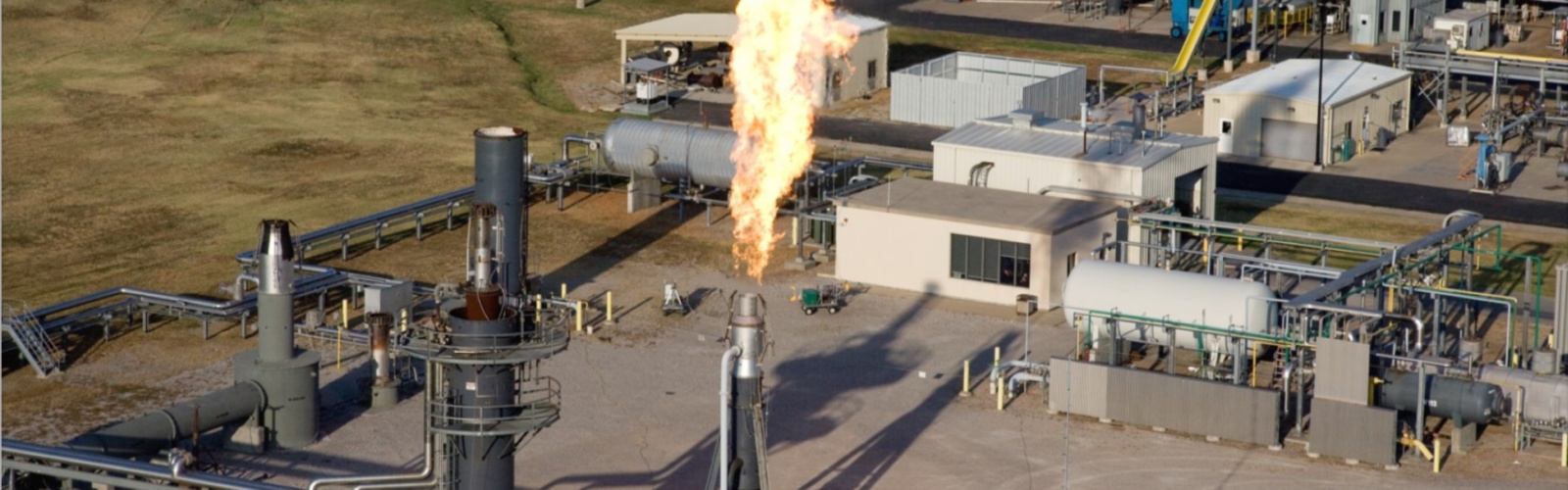
In plant design, flare header consolidation is often considered a way to cut capital costs. Fewer headers mean less piping and lower installation expenses. But while the upfront savings can be attractive, combining dissimilar relief sources into a single flare header introduces significant safety risks, compliance challenges, and operational inefficiencies.
Mixing high- and low-pressure streams or rich and lean gas compositions forces design compromises that can lead to oversized flare tips, unstable combustion, and higher utility costs. In some cases, the trade-offs result in venting unburned gas, unintended smoking, or even visible flames, issues that jeopardize regulatory compliance and personnel safety.
This article explores the fundamentals of flare design, the risks of header consolidation, and how a total cost of ownership (TCO) analysis can guide smarter flare system decisions.
Flare Design Fundamentals
Flares must be robust, reliable, and able to handle wide variations in waste gas properties. Three core requirements drive flare design:
- Hydraulic Capacity
- The flare must have enough capacity to relieve plant flows without over-pressuring upstream equipment.
- If low-pressure and high-pressure sources share a header, the maximum back pressure should be set by the lowest-rated source potentially forcing oversized designs.
- Stable Combustion
- Waste gases must burn across their entire operating range.
- Lean gases (<~800 Btu/scf)require larger exit areas or enrichment to stay within flammability limits.
- Rich gases benefit from higher velocities but may then require assist media (air, steam, or fuel gas) to remain smokeless.
- Regulatory Compliance
- Standards such as40 CFR 63.670and 60.18set limits on flare exit velocity,NHVcz(net heating value in the combustion zone), visible flame, smoking, noise, and radiation.
- Noncompliance can lead to fines,emissionsviolations, community complaints, or safety risks.
When unlike sources are combined, flare sizing must accommodate the lowest-pressure and leanest gas stream. This often results in oversized flare tips, higher enrichment requirements, and increased assist media usage.
Risks of Combining Dissimilar Sources
Operational Inefficiencies
- Oversized flare tips demand more assist media and are more prone to internal burning, which reduces equipment life.
- Poor turndown leads to wasted utilities, as assist media flow cannot be scaled down effectively at low flare rates.
- Larger flare tips require stronger structures to withstand dead loads and wind.
Transition Hazards
Transitions between flaring events are especially problematic in staged ground flares:
- Lean-after-rich event: If theheadercontainsrich gas and a lean relief begins, the lean burners receive rich gas first,causing long flames and smoke until lean gas arrives.
- Rich-after-lean event: If rich gas follows lean relief, the header initially feeds lean gas to rich burners. Lean gas cannot ignite, leading to unlit venting until composition stabilizes.
- Simultaneous reliefs: Low flow rates may cause long flames and smoking, while higher flows can vent lean gas through high-pressure tips untilenough richgas mixes for ignition.
These scenarios risk environmental noncompliance, visible emissions, and personnel exposure especially hazardous in ground flares where venting occurs at grade.
Total Cost of Ownership: Economics of Separation
While consolidation reduces upfront piping, a TCO analysis can show separation pays off:
Elevated Flares
- Case Example: A separated elevated flare system eliminated steam assist entirely.
- Natural gas (pilot/purge):$3.04/MMBtu.
- Steam:$9.39/1,000 lbs.
- Insulated steam piping:$30/ft (4”),$60/ft (8”).
- Large-bore header piping:$4/lb.
- Result: Higher initial CAPEX, but continuous utility savings offset costs. Payback in ~5 years.
Multi-Point Ground Flares (MPGFs)
- Typical MPGF box:$10–15MM.
- Added 24” header (3,000 ft): ~$500,000(~3.5–5% of total cost).
- No ongoing utility savings,but separation prevents lean gas enrichment to 800 Btu/scf, which can exceed plant fuel gas infrastructure capacity.
- Benefit: Safer operations and simpler maintenance, particularly for vessel blowdowns or low-pressure cases.
Practical Grouping Guidelines
John Zink recommends applying the following design guardrails:
- Group sources with similar heating values and pressures.
- Rich and lean in low-pressure tips may be combined only if the lean stream (plus enrichment) is<15%of the largest rich stream volume flow.
- Donotgroup rich and lean in MPGFs.
- Do not group high- and low-pressure sources if simultaneous reliefs are possible.
Quick Reference Checklist
- Do sources have similar pressures and NHV?
- Will combining require oversized tips or higher enrichment rates?
- Could transition events cause venting or smoking?
- Can plant utilities handle added steam/enrichment demand?
- Does the designcomplywith40 CFR 63.670?
Glossary
- NHVcz(Net Heating Value in Combustion Zone): Minimum heating value required for stable combustion per U.S. regulations.
- Assist Media: Steam, air, or fuel gas used to improve smokeless burning capacity.
- Internal Burning: Flame stabilized inside a flare tip, leading to shortened life and higher utility consumption.
Conclusion
Flare header consolidation may save money upfront, but it often creates larger long-term risks and costs. Oversized tips, unstable combustion, and transition hazards can compromise compliance and safety while driving up utility consumption.
By evaluating relief sources early and separating dissimilar streams, operators can:
- Improve safety margins.
- Lower utility demand.
- Simplify maintenance.
- Achieve compliance withenvironmental regulations.
In elevated flare systems, separation can pays back in utility savings in a reasonable timeframe. For MPGFs, the additional header cost is a modest premium for a safer, more reliable system.
At John Zink, we help customers design flare systems that balance safety, efficiency, compliance, and total cost of ownership.
Ready to evaluate your flare header design? Contact John Zink to schedule a system risk and TCO assessment.